

Understanding is one of the essential dimensions through which Wisdom becomes possible. Knowledge may provide the facts of reality, but understanding reveals their meaning, relationships, causes, implications, and significance.
A person may know many things without truly understanding them. Knowledge can tell us what something is, but understanding seeks to discover why it is, how it relates to other things, what it means, and what consequences may arise from it.
Wisdom therefore requires more than the possession of knowledge. It requires the capacity to penetrate beyond appearances and perceive the deeper relationships within reality.
Understanding connects the known with the meaningful.
It transforms isolated information into coherent knowledge. It enables the human mind to recognise relationships between causes and effects, principles and consequences, actions and outcomes, individuals and society, and humanity and the larger order of creation.
Without understanding, knowledge may remain fragmented. With understanding, knowledge becomes integrated.
This is why understanding occupies an important position in the architecture of Wisdom. It is the bridge between knowing and discerning. Knowledge gives the mind something to work with; understanding reveals what that knowledge means; discernment evaluates what is appropriate; judgment determines what ought to be done; and Wisdom governs the whole process according to truth and the highest good.
Understanding also requires the ability to see beyond the immediate.
A wise person does not judge reality solely by what appears at the surface. Wisdom seeks to understand origins, relationships, circumstances, intentions, consequences, and the wider context in which an event or decision exists.
This deeper vision is essential because human actions rarely exist in isolation. Every action can produce consequences beyond the person who performs it. A decision may affect a family, a community, an institution, a nation, or even future generations.
Understanding therefore expands consciousness from the immediate to the wider whole.
It teaches the mind to ask not only, “What is happening?” but also, “Why is it happening?”, “What does it mean?”, “What caused it?”, “What will follow from it?”, and “How does it relate to the greater order of things?”
These questions move intelligence toward Wisdom.
Understanding also requires humility. The recognition that reality is greater than any individual’s present knowledge creates an openness to continued learning. A person who assumes that everything is already understood closes the door to deeper Wisdom.
True understanding is therefore not intellectual arrogance. It is intellectual openness disciplined by careful observation, reflection, inquiry, experience, and truth.
Understanding deepens through experience, but experience alone does not guarantee understanding. Two people may pass through the same event and derive entirely different meanings from it. The difference lies in reflection, perception, interpretation, and the ability to connect experience with broader principles.
Wisdom transforms experience into understanding and understanding into responsible action.
Understanding is also inseparable from empathy and human relationship. To understand another person is not merely to know facts about that person. It is to perceive their circumstances, motivations, struggles, aspirations, limitations, and humanity. Such understanding creates the foundation for compassion, justice, patience, and responsible judgment.
In this sense, understanding enlarges the moral dimension of intelligence.
The person who understands the interconnectedness of life becomes less likely to act carelessly toward others because the consequences of individual actions become visible within the larger whole.
This principle leads naturally toward Universal Oneness.
If reality is interconnected, then understanding cannot remain confined to isolated parts. The deeper the understanding, the greater the recognition of relationships. The individual is related to the family; the family to the community; the community to society; society to civilization; humanity to nature; and creation to the larger order in which all existence participates.
Wisdom therefore does not merely accumulate understanding. It integrates understanding into a unified vision of reality.
Understanding enables the mind to move from separation toward relationship, from fragmentation toward wholeness, and from mere observation toward meaningful participation.
The relationship between Wisdom and Understanding may therefore be expressed simply:
Knowledge tells us what we know.
Understanding tells us what it means.
Discernment tells us what matters.
Judgment tells us what ought to be done.
Wisdom brings the whole into harmony with truth.
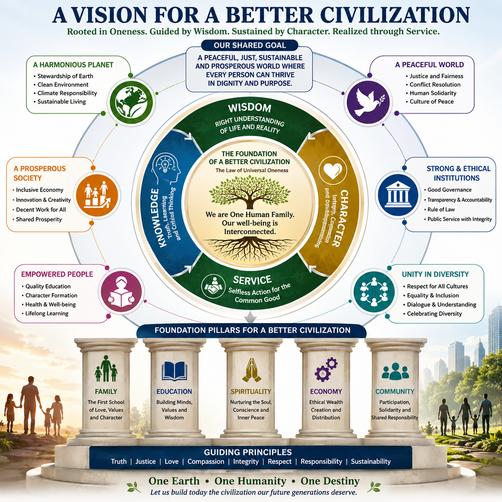
Thus, understanding is not the final destination of intelligence. It is one of the essential pathways through which intelligence becomes Wisdom.
Where knowledge may answer the question, “What?”, understanding proceeds toward “Why?”, “How?”, “What does it mean?”, and “What follows?”
Wisdom goes further still: “What is the right response?”
This progression demonstrates that Wisdom is not merely the accumulation of intellectual capacities. It is their proper integration and direction.
The highest understanding therefore does not merely enable a person to know more about reality. It enables the person to live more wisely within reality.
Understanding becomes Wisdom when knowledge is illuminated by meaning, meaning is guided by truth, truth is expressed through character, and character is translated into responsible action.
Wisdom is consequently the maturity of understanding: the ability to comprehend reality deeply enough to live and act in harmony with it.
–Dr. Anthonymaria Odukaesieme, D.Sc.
Founder of Unisophy
Founder of Wisdomology
Founder of Character Intelligence Science