

Wisdom is not merely an attribute of human beings or a quality of good judgment. It is a profound reality that can be examined, understood, studied, developed, and applied. The systematic study of Wisdom therefore gives rise to Wisdomology: the Science of Wisdom.
Wisdomology is concerned with the nature, structure, principles, functions, expressions, development, and application of Wisdom. It seeks to understand what Wisdom is, how Wisdom operates, how Wisdom relates to knowledge, intelligence, understanding, discernment, judgment, character, truth, action, and how Wisdom participates within the larger order of existence.
Wisdomology therefore does not merely ask, “What is Wisdom?”
It asks:
How does Wisdom operate?
What constitutes Wisdom?
How is Wisdom distinguished from knowledge and intelligence?
How is Wisdom developed?
How does Wisdom influence character?
How does Wisdom govern action?
How does Wisdom relate to truth?
How does Wisdom operate within Universal Oneness?
How does Wisdom contribute to human civilization?
These questions establish Wisdomology as a systematic field of inquiry.
The word Wisdomology expresses the study of Wisdom in an organised and comprehensive manner. It seeks to move the understanding of Wisdom beyond scattered observations, philosophical reflections, moral teachings, and individual experience toward an integrated body of knowledge.
Wisdomology therefore studies Wisdom as both a principle and a process.
As a principle, Wisdom provides direction for right understanding and right living.
As a process, Wisdom develops through learning, reflection, experience, discernment, judgment, character formation, and responsible action.
Wisdomology consequently recognises that Wisdom is not merely something one is born possessing in complete form. It can be cultivated.
Human beings may possess different levels of natural intelligence, experience, knowledge, and ability, but Wisdom can develop through disciplined learning and the conscious formation of character.
This makes Wisdomology relevant to education.
Education traditionally seeks to increase knowledge and intellectual capability. Wisdomology extends this purpose by asking how knowledge and intelligence can be integrated with character, responsibility, truth, and the wellbeing of the whole.
Knowledge without Wisdom may increase capability without direction.
Intelligence without Wisdom may increase problem-solving capacity without moral orientation.
Power without Wisdom may increase the ability to influence without responsibility.
Wisdomology therefore seeks the integration of capability and responsibility.
Its fundamental concern is not merely how much a person knows, but how wisely that knowledge is understood and applied.
Wisdomology also examines the architecture of Wisdom.
Wisdom does not operate as an isolated faculty. It emerges through the interaction of several dimensions of human development.
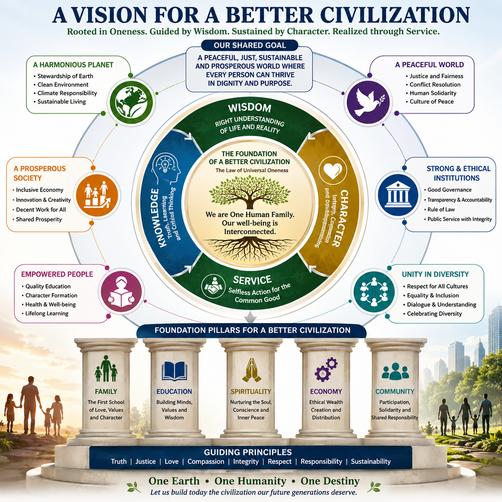
Knowledge provides content.
Understanding provides meaning.
Discernment provides distinction.
Judgment provides decision.
Character provides stability.
Action provides expression.
Truth provides foundation.
Love provides relational purpose.
Responsibility provides accountability.
Wisdom integrates these dimensions.
This integrated nature is essential to understanding Wisdomology.
Wisdom cannot be reduced to intelligence because intelligence alone does not guarantee good judgment.
Wisdom cannot be reduced to knowledge because knowledge alone does not determine how knowledge should be used.
Wisdom cannot be reduced to morality because Wisdom also involves understanding reality, relationships, consequences, and the proper application of knowledge.
Wisdom cannot be reduced to experience because experience can produce either understanding or prejudice depending on how it is interpreted.
Wisdom therefore represents a higher integration of human capacities.
Wisdomology also examines the development of Wisdom across the stages of human life.
Childhood provides the foundation of learning.
Education expands knowledge.
Experience provides encounters with reality.
Reflection converts experience into understanding.
Discernment develops the ability to distinguish.
Character gives consistency to values.
Judgment guides decisions.
Action provides practical expression.
Through this developmental process, Wisdom can become increasingly mature.
Wisdomology is therefore not merely theoretical. It is developmental and practical.
Its purpose is to contribute to the formation of human beings who are capable of using knowledge responsibly, making sound judgments, developing strong character, and contributing positively to society.
This makes Wisdomology relevant to many fields.
It has implications for education.
It has implications for science.
It has implications for medicine.
It has implications for technology.
It has implications for leadership.
It has implications for law.
It has implications for economics.
It has implications for governance.
It has implications for family and community life.
It has implications for human civilization.
In each of these areas, the fundamental question remains:
How can human knowledge and capability be governed by Wisdom?
This question becomes increasingly important as humanity’s technological and scientific capabilities expand.
Artificial intelligence, biotechnology, advanced communication systems, automation, and other emerging technologies are increasing the capacity of human beings to influence the world. The greater the capacity becomes, the greater the need for Wisdom to guide its application.
Wisdomology therefore has contemporary relevance.
It provides a conceptual framework for examining the relationship between intelligence and responsibility.
The central principle may be expressed simply:
Knowledge increases what humanity knows.
Intelligence increases what humanity can do.
Wisdom determines how what humanity knows and can do should be used.
This distinction gives Wisdomology its significance.
Wisdomology also recognises that Wisdom has both individual and collective dimensions.
An individual can develop Wisdom.
A family can cultivate Wisdom.
An institution can operate according to wise principles.
A society can develop collective Wisdom.
A civilization can aspire to civilizational Wisdom.
Collective Wisdom emerges when knowledge, experience, values, institutions, and decisions are organised toward the responsible wellbeing of the whole.
Thus, Wisdomology extends from the individual mind to civilization.
At its deepest level, Wisdomology also examines the relationship between Wisdom and Universal Order.
If Wisdom is the skill, the lens, and the Universal Order through which realities, interconnectedness, harmony, and the totality of existence are perceived, understood, coordinated, and expressed, then the study of Wisdom must ultimately include the study of the order within which existence operates.
Wisdomology therefore naturally connects with Unisophy.
Unisophy examines Universal Oneness.
Wisdomology examines Wisdom.
The Law provides the governing principle of the relationships within Oneness.
Together, these form a philosophical system in which Wisdom is understood not merely as personal prudence but as a foundational principle for understanding and responsibly participating in existence.
Wisdomology therefore represents the systematic pursuit of Wisdom for the development of the individual, the advancement of knowledge, the formation of character, the responsible use of intelligence, and the harmonious development of civilization.
Its ultimate purpose is not to make humanity merely more knowledgeable.
Its purpose is to make knowledge wiser.
Not merely to make humanity more intelligent.
But to make intelligence more responsible.
Not merely to increase power.
But to ensure that power is governed by Wisdom.
Not merely to advance civilization.
But to advance civilization in harmony with truth, character, justice, Love, Universal Oneness, and the larger order of creation.
Wisdomology is therefore the Science of Wisdom.
And the Science of Wisdom is ultimately a science of understanding how human intelligence can become consciously aligned with truth, responsibility, harmony, and the Universal Order.
-Dr. Anthonymaria Odukaesieme, D.Sc.
Founder of Unisophy
Founder of Wisdomology
Founder of Character Intelligence Science