

The Architecture for Human Transformation, Academic Revolution, and a Better Civilization
Odukaesieme’s Model of Education is a solution-based educational framework and practical instrument for solving the problems that produce moral decadence, societal ills, irresponsible conduct, and the conditions that hinder human and social development. It transforms education from the mere transmission of knowledge into an instrument for Wisdom, character formation, responsible conduct, and social transformation. By placing Wisdom at the centre of education, it equips people to understand problems, discern their causes, exercise sound judgment, make responsible decisions, and convert knowledge into right action.
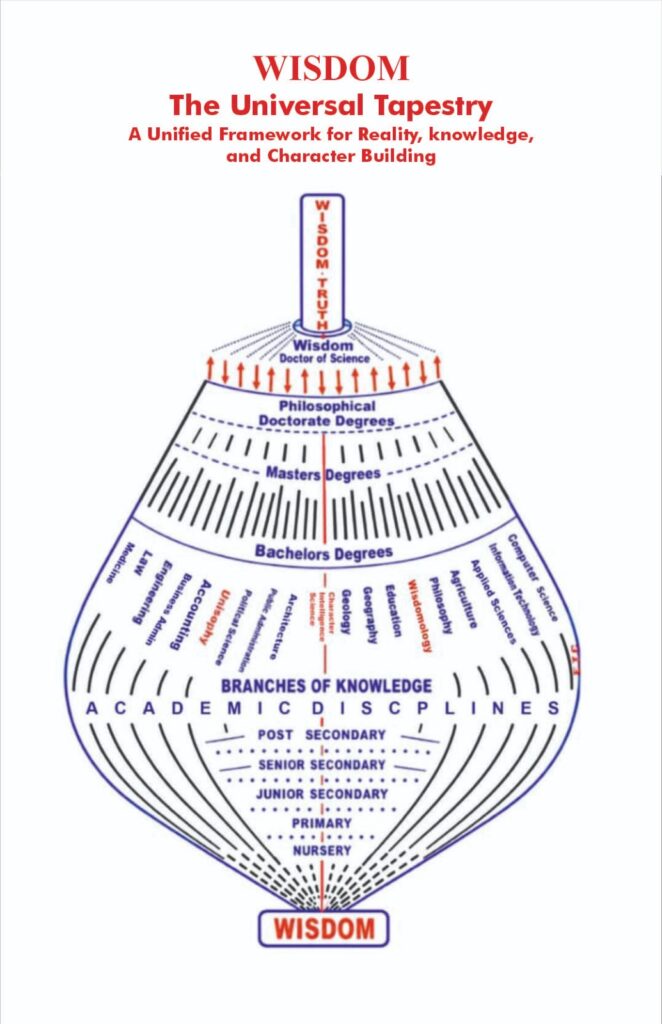
Wisdom has accompanied humanity from antiquity, yet its systematic place within organized education and the architecture of knowledge remains underdeveloped. Philosophers, sages, and civilizations have explored Wisdom as virtue, judgment, moral excellence, and a way of life. This work takes a different path: it seeks to make Wisdom systematically teachable, learnable, developable, applicable, and transmissible. Its originality therefore does not lie in claiming to have invented Wisdom, but in constructing an intellectual and educational architecture through which Wisdom can be consciously learned, developed, embodied, taught, and applied.
The central question consequently moves beyond “What is Wisdom?” to “How can Wisdom be learned, developed, taught, and applied?” Conventional philosophical inquiry has often examined Wisdom through definitions, theories, virtues, ideals, and reflections on the good life. Odukaesieme’s approach organizes the principles, structure, processes, applications, and educational methods of Wisdom into a coherent system. It therefore moves from contemplation to instruction, from knowledge to understanding, from understanding to discernment, and from discernment to responsible action.
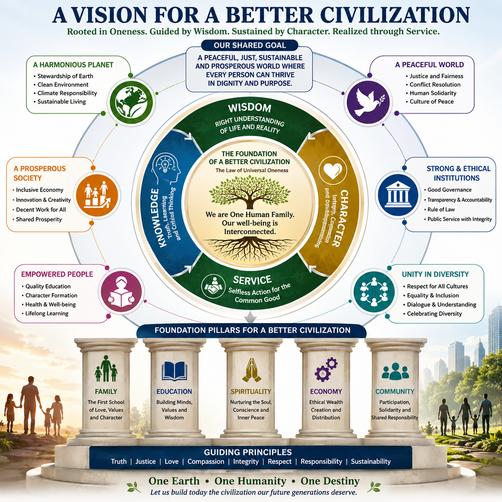
This architecture gives rise to three complementary fields of knowledge. Wisdomology is the systematic study and science of Wisdom—its nature, structure, principles, development, application, and connection with knowledge and understanding. Unisophy is the philosophy of Universal Oneness—the framework through which the unity, interconnectedness, harmony, and wholeness of existence are understood. Character Intelligence Science is the systematic study and development of character as an intelligence expressed through virtues, judgment, responsibility, conduct, and right action. Together, they form an integrated architecture in which Wisdom provides direction, Universal Oneness provides philosophical foundation, and character provides the intelligence required for responsible expression.
The architecture does not seek to replace existing academic disciplines; it seeks to integrate their contributions through Wisdom. Knowledge provides information; understanding gives it meaning; Wisdom provides discernment and direction; character governs its expression; and right action converts knowledge into human and social value. Education thus becomes more than the acquisition of information. It becomes a process of developing the capacity to understand reality, judge rightly, act responsibly, solve problems, and contribute to human flourishing.
Its methodology is foundational, constructive, deductive, and systemic. It begins with clear concepts and principles, establishes their logical connections, and develops their implications across individual life, education, leadership, institutions, society, and civilization. Its distinctive contribution is therefore not merely another discourse about Wisdom, but an architecture through which Wisdom is organized as a field that can be taught, learned, cultivated, applied, evaluated, and transmitted.
The model has both an academic and a transformative mission. Academically, it seeks to advance Wisdom from a recurring subject of philosophical inquiry into an organized field of learning and an integrating principle across knowledge. Socially, it seeks to develop people and institutions in which intelligence is guided by character, knowledge by discernment, power by responsibility, leadership by justice, conduct by compassion, and human development by an understanding of Universal Oneness. Education, in this model, becomes a deliberate instrument for preventing social dysfunction and producing individuals capable of solving the problems they encounter.
Wisdom was never new; what has been neglected is its systematic educational development. LEARN AND TEACH WISDOM is therefore a call to move humanity beyond the accumulation of information toward understanding, discernment, character, responsible action, and civilization. Its transformative progression is:
KNOWLEDGE → UNDERSTANDING → WISDOM → CHARACTER → RIGHT ACTION → HUMAN TRANSFORMATION → A BETTER CIVILIZATION
This is the foundation of the proposed academic revolution: not the rejection or replacement of existing knowledge, but its elevation through Wisdom—and the transformation of education from the transmission of knowledge into the formation of human beings capable of using knowledge rightly for the advancement of humanity and civilization.
Dr. Anthonymaria Odukaesieme, D.Sc.
Founder of Unisophy
Founder of Wisdomology
Founder of Character Intelligence Science