

UNSPOKEN TRUTH
(The Reality, Evidence, Experience, and Witness Beyond Words)
A2.0 THE OPENING INSIGHT
Not all Truth is spoken.
Reality may exist before, beyond, and independently of human expression in words. Truth may be encountered through action, character, experience, observation, silence, nature, consequences, relationships, conscience, and order.
However, communication, perception, evidence, and interpretation are not themselves identical to Truth.
Truth is what is actually the case, whether or not it is adequately expressed, observed, understood, or proven.
Unspoken communication may therefore disclose, indicate, or provide evidence concerning Truth, but its meaning must be examined carefully.
A2.1 THE NATURE OF UNSPOKEN TRUTH
Unspoken Truth may be encountered through character, conduct, actions, consequences, experience, observation, nature, relationships, conscience, silence, creation, order, scientific inquiry, and the limits of human understanding.
These are not automatically Truth; they may be sources, signs, experiences, or forms of evidence through which Truth is examined.
Spoken Truth gives Truth a voice.
Unspoken Communication may give Truth a witness.
A2.2 SILENCE AS COMMUNICATION
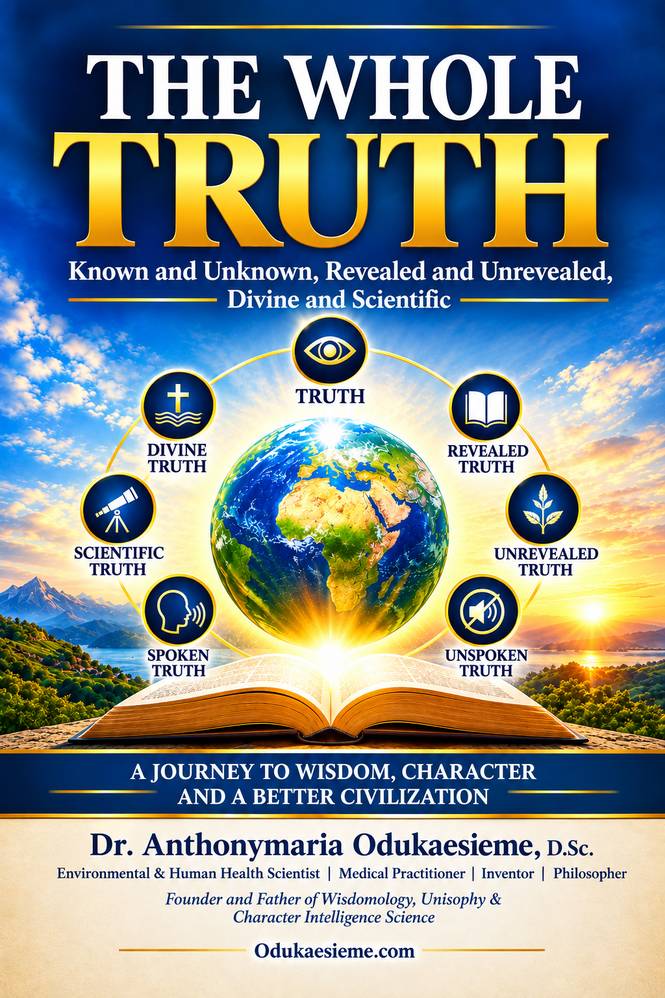
Silence can communicate reflection, reverence, restraint, uncertainty, grief, acceptance, understanding, or Wisdom.
But silence does not automatically mean agreement, guilt, innocence, knowledge, consent, or Truth.
Its meaning depends upon context and must therefore be interpreted carefully.
A2.3 CHARACTER AND CONDUCT
Character communicates through conduct, habits, choices, and consistent patterns of behaviour.
Consistent conduct may provide evidence of enduring dispositions, but it does not automatically reveal every motive or establish the whole character of a person.
Context, intention, opportunity, and contrary evidence must also be considered.
Character is therefore evidence of enduring dispositions as revealed through consistent conduct.
A2.4 ACTION AND CONSEQUENCES AS EVIDENCE
Actions can communicate what words may not.
An action may establish that something happened without conclusively establishing why it happened. Conduct may provide evidence of intention without being infallible proof of motive.
Consequences can reveal important information and may support conclusions about causes or decisions, but they do not automatically prove a single cause, intention, moral status, or universal principle.
A good outcome does not automatically prove wisdom or morality, nor does a bad outcome automatically prove foolishness or wrongness.
A2.5 NATURE AS WITNESS
Nature provides observable patterns, relationships, processes, and order.
Science examines these through observation, evidence, analysis, experimentation, and verification.
Nature can therefore witness observable reality, but the meaning assigned to natural patterns requires disciplined reasoning and intellectual humility.
A2.6 DIVINE TRUTH, THE UNKNOWN, AND THE UNREVEALED
Divine Truth, if revealed, may exceed the complete capacity of human language.
The inability to express or test something completely does not establish either its existence or its nonexistence.
The unknown is not necessarily nonexistent.
The unexplained is not necessarily impossible.
The unproven is not necessarily false.
But what is unknown does not become true merely because it has not been disproved.
Wisdom therefore requires uncertainty to remain uncertainty until sufficient grounds justify greater certainty.
Mystery, personal experience, interpretation, and established Truth must be distinguished.
A2.7 CONSCIENCE AS UNSPOKEN COMMUNICATION
Conscience is an internal sense of moral awareness and judgment.
It is important but not infallible. It can be influenced by education, culture, experience, environment, beliefs, misinformation, and conditioning.
Conscience therefore requires formation and examination.
Moral certainty is not automatically proof of Truth.
Character Intelligence strengthens discernment through Truth, Understanding, discipline, Responsibility, and virtue.
A2.8 UNSPOKEN COMMUNICATION AND ARTIFICIAL INTELLIGENCE
Artificial Intelligence can detect patterns in language, images, behaviour, decisions, and transactions.
But pattern detection is not automatically meaning, causation, or Truth.
Correlation is not causation.
Prediction is not certainty.
Classification may reflect limitations or biases within the data and system.
Character Intelligence is therefore necessary for the responsible interpretation and application of intelligence.
A2.9 FROM DETECTION TO WISDOM
The responsible movement from observation to action can be expressed as:
Detection
→ Evidence Assessment
→ Interpretation
→ Understanding
→ Judgment
→ Application
Detection identifies a pattern.
Evidence assesses its support.
Interpretation assigns meaning.
Understanding examines that meaning.
Judgment evaluates it.
Application puts the conclusion into responsible practice.
A2.10 SPOKEN TRUTH AND UNSPOKEN COMMUNICATION
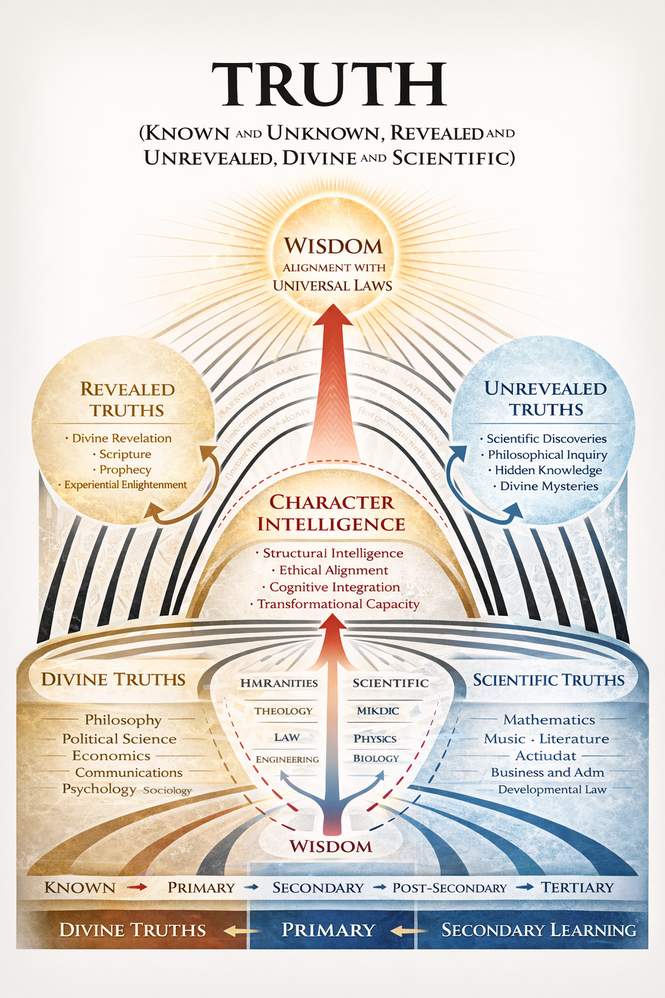
Spoken Truth and Unspoken Communication are complementary.
Spoken Truth expresses, teaches, explains, and communicates.
Unspoken Communication may demonstrate, provide evidence, or reveal through experience and observation.
When words and actions agree, credibility is strengthened.
When they contradict one another, the contradiction requires examination and explanation.
Eloquence alone does not establish Truth. Words must be examined against reality, evidence, context, conduct, application, and understanding.
A2.11 A LIFE THAT SPEAKS
A person’s life can communicate through discipline, humility, honesty, compassion, courage, responsibility, sacrifice, and consistent conduct.
A life may therefore become a testimony.
Yet testimony remains evidence and does not automatically establish every claim about a person or their motives.
A2.12 THE LIMITS OF HUMAN UNDERSTANDING
Human beings must distinguish between what is:
• Observed.
• Inferred.
• Believed.
• Established.
What is observed may require interpretation.
What is inferred may require further evidence.
What is believed may not yet be established.
What is established must remain open to correction when stronger evidence appears.
Wisdom therefore requires intellectual humility.
A2.13 THE WHOLE TRUTH
The Whole Truth includes:
Known and Unknown.
Revealed and Unrevealed.
Spoken and Unspoken.
Visible and Invisible.
Discovered and Undiscovered.
Observed and Unobserved.
Divine and Scientific.
These represent different dimensions and pathways of inquiry.
Yet not everything measurable is automatically Truth, and not everything mysterious is automatically Truth.
Each claim requires the appropriate method, evidence, reasoning, and degree of certainty.
A2.14 THE INTEGRATION OF SPOKEN AND UNSPOKEN TRUTH
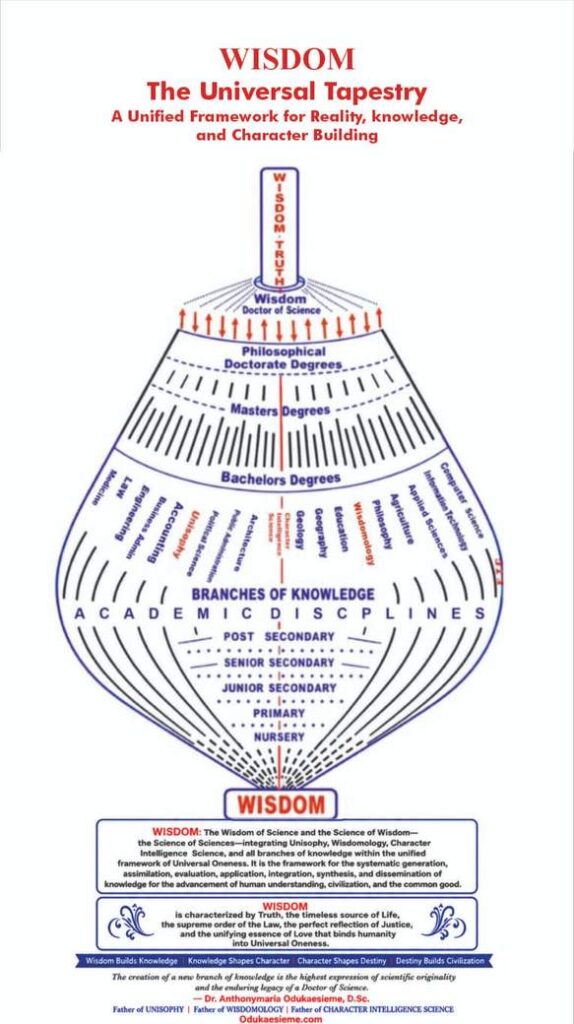
Words provide expression.
Reality provides what must be examined.
Evidence supports or challenges claims.
Character demonstrates through conduct.
Experience provides encounter.
Understanding interprets meaning.
Wisdom provides direction.
Within the architecture of Universal Intelligence, Human Intelligence, Character Intelligence, and Artificial Intelligence, intelligence must be aligned with Truth, Understanding, Character, Responsibility, and Wisdom.
The deeper objective is not merely to communicate or detect information, but to distinguish communication, evidence, interpretation, and certainty from Truth itself.
A2.15 CONCLUSION
Unspoken Truth reminds humanity that reality is greater than language.
Some Truth may be observed, experienced, demonstrated, lived, discovered, revealed, or remain beyond present understanding.
We must therefore listen not only to what is spoken but also examine what reality presents.
Silence may communicate, but it is not automatically consent or proof.
Conduct may provide evidence, but it does not automatically prove motive or the whole character.
Consequences may teach, but they do not automatically prove one cause or one moral conclusion.
Nature may reveal observable order, but observation alone does not settle every philosophical or theological interpretation.
Artificial Intelligence may detect patterns, but detection and prediction alone are not Wisdom or Truth.
The deeper challenge is to unite discovery, evidence, meaning, uncertainty, Character, Responsibility, and Wisdom in the search for Truth.
Spoken Truth gives Truth a voice.
Unspoken Communication gives possible Truth a witness.
Evidence gives claims support or challenge.
Interpretation gives experience meaning.
Character gives Truth a life.
Wisdom gives Truth direction.
In Spoken Truth, Truth is expressed.
In Unspoken Communication, Truth may be indicated.
In Evidence, claims are tested.
In Understanding, meaning is examined.
In responsible Character, Truth is embodied.
And in Wisdom, Truth finds its proper place within the order of existence.
-Dr. Anthonymaria Odukaesieme, D.Sc.
Founder and Father of Unisophy, Wisdomology, Character Intelligence Science